
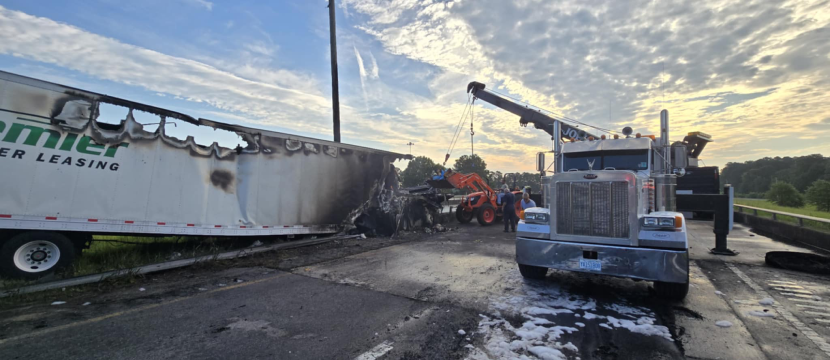
Driving alongside an 18-wheeler on a Mississippi highway like I-55 or US-49 is a common experience, but it is one that demands heightened awareness. The sheer size of these machines is difficult to ignore. The roar of the engine, the hiss of the air brakes, and the shadow it casts over your vehicle are constant reminders of the immense power and momentum at play. It is this fundamental reality—the physics of a commercial truck’s size and weight that makes them uniquely dangerous in a collision.
When an accident occurs, the aftermath can be devastating, leaving victims with severe injuries and overwhelming questions about their future.
The Unforgiving Physics of an 80,000-Pound Vehicle
The difference between a passenger car and a fully loaded tractor-trailer is staggering. Federal law permits a commercial motor vehicle (CMV) to have a gross weight of up to 80,000 pounds. To put that in perspective, this is the equivalent of roughly 20 to 30 average-sized cars. When this mass is moving at highway speeds, it generates an enormous amount of kinetic energy.
This energy is the force that must be controlled by the driver and dissipated in a crash. In a collision between a large truck and a smaller vehicle, the occupants of the car absorb a disproportionate amount of this violent force. The laws of physics are unforgiving, and the simple mismatch in mass is a primary reason why injuries in truck accidents are often catastrophic or fatal for those in the passenger vehicle.
How Does a Truck’s Weight Affect Its Braking and Stopping Distance?
One of the most critical safety issues related to a truck’s weight is its stopping distance. A heavy vehicle cannot stop on a dime. The momentum created by 40 tons of steel, rubber, and cargo requires a significant amount of time and distance to overcome, a fact that many passenger vehicle drivers do not fully appreciate when they pull in front of a big rig.
Consider the difference:
- A passenger car traveling at 65 miles per hour needs approximately 300 feet to come to a complete stop under ideal conditions.
- A fully loaded commercial truck traveling at the same speed requires nearly 600 feet—the length of two football fields—to stop.
This distance can be even longer if other factors are present, such as wet roads from a Mississippi thunderstorm, worn brake pads, or a driver’s delayed reaction time. An attorney investigating a truck accident will carefully analyze factors like skid marks, road conditions, and the truck’s event data recorder (or “black box”) to determine if the driver failed to account for the necessary stopping distance required for their massive vehicle.
Navigating the “No-Zones”: A Truck’s Dangerous Blind Spots
The immense length and height of a tractor-trailer create significant blind spots, often called “No-Zones,” where the driver has zero visibility. Any car traveling within these areas is effectively invisible to the truck driver. These blind spots are a leading cause of lane-change and sideswipe accidents.
Every commercial truck has four primary blind spots:
- Directly in Front: The driver sits high above the road, and the long hood can obscure a smaller vehicle that is too close to the front bumper. It is recommended to stay at least 20 feet ahead of a truck.
- Directly Behind: The trailer completely blocks the view immediately behind the truck. Following too closely, or tailgating, is extremely dangerous as the driver cannot see you. A safe following distance is key.
- The Left Side: The blind spot on the driver’s side runs from just behind the cab along the side of the trailer.
- The Right Side: This is the largest and most dangerous blind spot, extending from the front of the truck all the way back and across multiple lanes of traffic. Drivers should never pass a truck on the right, especially when it is preparing to make a right turn.
When a truck driver changes lanes without confirming their blind spots are clear, the consequences can be tragic.
Why are Wide Turns So Dangerous for Tractor-Trailers?
Large trucks cannot make tight turns like smaller vehicles. Because of their long wheelbase, the rear wheels will follow a much shorter path than the front wheels. This phenomenon is known as “off-tracking.” To compensate, a driver must often swing the cab of the truck wide into an adjacent lane to execute a turn, particularly a right-hand turn at an intersection.
This maneuver creates a serious hazard known as a “squeeze play” accident. It happens when a passenger car, attempting to pass on the right or simply located in the right lane, gets trapped between the turning trailer and the curb. The driver of the smaller vehicle may not realize the truck is about to turn and can be crushed or pinned by the trailer as it cuts across the lane.
The Dangers of Overloaded and Improperly Loaded Trucks
Federal and state regulations strictly govern how much weight a truck can carry and how its cargo must be secured. Violating these rules is a form of negligence that puts everyone on the road at risk.
- Overloaded Trucks: A truck that exceeds the 80,000-pound limit is a danger for many reasons. The excess weight puts immense strain on the braking system, making it harder to stop. It can cause tires to overheat and blow out and can lead to suspension or axle failure. Trucking companies that encourage or turn a blind eye to overloading in the name of profit can be held liable for a resulting crash.
- Improperly Loaded Cargo: Even if a truck is within the legal weight limit, how the cargo is loaded is just as important. Unbalanced or poorly secured freight can shift during transit, causing the driver to lose control. A high center of gravity from top-heavy loads increases the risk of a rollover accident, while unsecured items can fall from the truck and create deadly road hazards. The Federal Motor Carrier Safety Administration (FMCSA) has detailed rules for cargo securement, and failure to follow them can be a key factor in establishing liability.
How Poor Maintenance Worsens Size and Weight Dangers
The immense weight of a commercial truck places enormous stress on all its mechanical components. Regular and thorough maintenance is not just good practice; it is a legal requirement and a matter of public safety. When trucking companies cut corners on maintenance, they magnify the dangers already posed by the vehicle’s size.
Key systems that can fail under the strain of heavy loads include:
- Brakes: Constant use can lead to “brake fade,” where the brakes become less effective due to overheating. A complete brake failure on an 80,000-pound vehicle is a worst-case scenario.
- Tires: Worn or underinflated tires are far more likely to fail under a heavy load, which can cause a driver to lose control instantly.
- Suspension: A worn-out suspension system affects the truck’s stability and steering, making a rollover or loss of control more likely.
- Coupling Devices: The “fifth wheel” that connects the tractor to the trailer must be in good working order. If it fails, the trailer can detach and career into other lanes of traffic.
Who is Liable When a Truck’s Size or Weight Causes a Crash?
Following an accident involving a semi-truck, determining liability is often far more complex than in a typical car wreck. The size and weight of the truck are contributing factors, but the legal responsibility may extend beyond just the driver.
Several parties could be held responsible, including:
- The Truck Driver: If they were speeding, following too closely, or failed to account for the truck’s physical limitations.
- The Trucking Company (Motor Carrier): If they failed to properly maintain the vehicle, encouraged drivers to overload, or did not provide adequate training.
- The Cargo Shipper or Loader: If they improperly loaded, balanced, or secured the freight inside the trailer.
- The Truck or Parts Manufacturer: If the accident was caused by a defective component, such as faulty brakes or a defective tire.
An investigation into these crashes requires immediate action to preserve critical evidence, including the truck’s electronic data recorder, driver logs, maintenance records, and cargo manifests. This information is vital for proving how the truck’s size, weight, or condition contributed to the collision.
A Knowledgeable Advocate Can Make the Difference
The aftermath of a collision with an 18-wheeler is chaotic and overwhelming. Victims are left to deal with serious injuries, mounting medical bills, and aggressive insurance adjusters from the trucking company. You should not have to face this challenge alone. The immense physical forces involved in these crashes are matched by the powerful corporate and insurance interests you will be up against.
The dedicated legal team at Ray & Perry focuses on helping victims of commercial truck accidents in Mississippi. We manage all communications with the insurance companies, conduct a thorough investigation to uncover all contributing factors, and build a powerful case designed to secure the full and fair compensation you need to recover. If you or a loved one has been injured in a crash, contact us today for a free, no-obligation consultation to learn how we can stand up for your rights.
Frequently Asked Questions
Why are accidents involving large trucks more dangerous than those with passenger vehicles?
The primary factor is the massive weight and size difference. A fully loaded truck can weigh up to 80,000 pounds, compared to a car’s 3,000–4,000 pounds. In a collision, the smaller vehicle and its occupants absorb a catastrophic amount of force, leading to more severe injuries and a higher fatality rate.
How can I prove a truck was overloaded after a crash in Mississippi?
Proving a truck was overloaded requires a swift and thorough investigation. Evidence can include the driver’s logs, bills of lading that detail the cargo, and post-crash inspections. It may also be necessary to obtain records from the weigh stations the truck passed through before the accident.
Who is responsible if improperly loaded cargo causes an accident?
Liability for accidents caused by shifting or unsecured cargo can be complex. Depending on the circumstances, the responsible party could be the driver (if they failed to inspect the load), the trucking company, or a third-party shipping or loading company that was hired to secure the freight.
What is the most important thing to do immediately after an accident with a large truck?
First, ensure your safety and seek immediate medical attention, even if you feel fine, as some serious injuries have delayed symptoms. Second, if you are able, document everything at the scene with photos and videos, and get contact information from any witnesses. Finally, contact a law firm with experience in truck accident cases before speaking to any insurance adjusters.
Why is it important not to speak to the trucking company’s insurer alone?
The trucking company’s insurance adjuster is not on your side. Their primary goal is to protect their company’s financial interests by minimizing or denying your claim. They are trained to ask questions that may get you to inadvertently admit fault or downplay your injuries. Having a lawyer handle all communication ensures your rights are protected.




