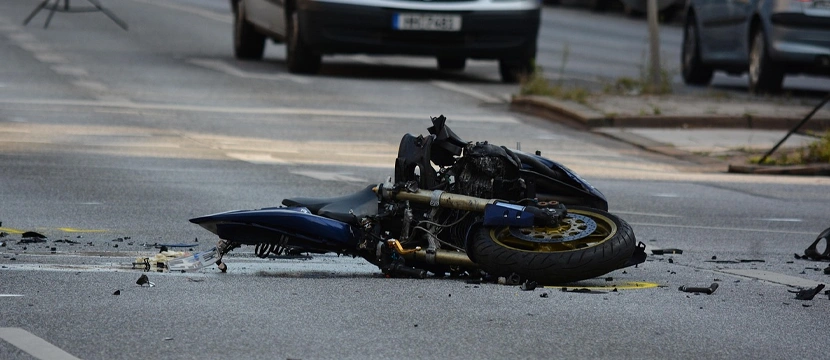
The freedom of a ride through Clay County, whether on Highway 50 or along the Natchez Trace Parkway, is something special. For a motorcyclist, it is an experience that connects you to the road and the world around you in a way no car ever could. But in an instant, the carelessness of another driver can shatter that freedom, replacing it with the harsh reality of twisted metal, pavement, and devastating injury. The moments following a motorcycle wreck are a blur of confusion, pain, and fear, marking the beginning of a difficult journey that no one should have to navigate alone.
Why Are Motorcycle Accident Claims So Different?
Many people wrongly assume a motorcycle crash is just a smaller version of a car accident. This viewpoint fails to account for the unique physical and legal dynamics at play. Cases involving motorcycles are fundamentally more complex and present distinct challenges that require a focused approach.
- Pervasive Bias Against Riders: There is an unfortunate and unfair stereotype that motorcyclists are reckless daredevils. Insurance adjusters and juries often default to this bias, attempting to shift blame onto the injured rider. Overcoming this prejudice is a significant hurdle and requires building a case based on hard evidence, not assumptions.
- Severity of Injuries: A rider has none of the protections offered by a passenger vehicle no steel frame, no airbags, no seatbelts. The human body absorbs the full force of the impact with the other vehicle and the road. This exposure means injuries are almost always severe or catastrophic, leading to a lifetime of medical needs and financial burdens.
- Complex Liability Scenarios: While a negligent driver is often the cause, other factors can contribute to a wreck. Poorly maintained roads with potholes or loose gravel, a defective part on the motorcycle, or a commercial driver’s violation of trucking regulations can all be contributing factors. Identifying every party that shares responsibility is a key part of a thorough investigation.
- Aggressive Insurance Tactics: Because the financial stakes are so high due to the severity of injuries, the at-fault driver’s insurance company will act aggressively to minimize its payout. They may rush you into a lowball settlement offer, pressure you for a recorded statement to use against you, or unfairly argue that your own actions caused the crash.
Helping You Move
Forward with Confidence.
What Are the Leading Causes of Motorcycle Wrecks in Mississippi?
A comprehensive investigation is required to uncover the precise cause of any collision. In our experience, most motorcycle accidents are not “accidents” at all but the direct result of a car or truck driver’s failure to operate their vehicle with the necessary care and attention.
Some of the most common causes of motorcycle collisions in and around West Point include:
- Cars Making Left-Hand Turns: This is perhaps the single most frequent cause of serious motorcycle accidents. A driver turning left at an intersection fails to see the oncoming motorcycle or misjudges its speed, turning directly into its path with no time for the rider to avoid a collision.
- Unsafe Lane Changes: Drivers who do not properly check their blind spots before changing lanes often move directly into a motorcyclist. The smaller profile of a bike makes it easy to miss for an inattentive driver.
- Rear-End Collisions: Distracted driving is a modern epidemic. A driver looking at a phone or GPS instead of the road ahead may not notice a motorcycle slowing or stopping in front of them until it is too late. For a rider, the consequences of a rear-end impact are far more severe than for a car’s occupants.
- “Dooring” Accidents: In areas with street parking, a driver or passenger may open their car door into the path of an approaching motorcycle without looking first, giving the rider no time to react.
- Dangerous Road Conditions: Government entities are responsible for maintaining safe roads. Potholes, unmarked hazards, loose gravel from construction on roads like Highway 45 Alternate, or poorly designed intersections can be a minor nuisance for a car but a deadly hazard for a motorcycle.
- Driving Under the Influence (DUI): A driver whose judgment and reaction time are impaired by alcohol or drugs poses an extreme danger to everyone on the road, especially vulnerable motorcyclists.
- Distracted Driving: Beyond cell phone use, any activity that takes a driver’s attention off the road adjusting the radio, eating, or dealing with passengers—can lead to a failure to see a nearby motorcycle.
What Kinds of Injuries Are Common in Motorcycle Collisions?
Due to the complete lack of protection, the injuries sustained by motorcyclists are often life-altering and require extensive, long-term medical treatment. Building a claim that fully accounts for a lifetime of care is a primary objective.
Common injuries include:
- Traumatic Brain Injuries (TBIs): Even with a helmet, the force of an impact can cause the brain to strike the inside of the skull, leading to concussions, brain bleeds, and permanent cognitive or functional impairments.
- Spinal Cord Injuries: Damage to the spinal cord can result in partial or complete paralysis, including paraplegia or quadriplegia, fundamentally changing a person’s life forever.
- Road Rash: This term does not do justice to the injury. Severe road rash involves the skin being scraped away, often down to the muscle or bone. It can lead to permanent scarring, disfigurement, and dangerous infections.
- Lower Extremity Injuries: The legs are highly exposed in a crash. It is common for riders to suffer complex fractures of the femur, tibia, and fibula, as well as shattered ankles and knee joints.
- Internal Injuries: The blunt force trauma of a collision can cause internal bleeding and damage to vital organs, which can be life-threatening if not treated immediately.
- Broken Bones and Fractures: Riders frequently suffer multiple broken bones, including fractured ribs, clavicles, arms, and wrists, which can lead to chronic pain and mobility issues.
How is Fault Determined in a Mississippi Motorcycle Accident Case?
To successfully recover compensation, you must prove that another party was negligent and that their negligence caused your injuries. Negligence is the legal term for when a person or entity fails to act with reasonable care, causing harm to another.
Mississippi follows a legal doctrine known as “pure comparative negligence.” This is a very important rule for injured victims. It means you can still recover damages even if you are found to be partially at fault for the accident. Your total compensation award will simply be reduced by your percentage of fault. For example, if you are awarded $100,000 but found to be 10% at fault, your recovery would be reduced by $10,000, for a total of $90,000. Insurance companies will work hard to assign as much fault as possible to the rider to reduce their payout, making it vital to have an advocate who can fight back with evidence.
Evidence used to establish fault includes:
- The official police accident report.
- Statements from any witnesses.
- Photographs and videos of the accident scene, vehicle damage, and your injuries.
- Analysis from accident reconstruction professionals.
- Footage from traffic cameras or nearby security cameras.
- The at-fault driver’s cell phone records.
What Compensation Can Be Recovered After a Motorcycle Wreck?
A successful claim seeks to provide financial compensation for every single loss you have suffered and will suffer in the future. The goal is to secure the resources you need to be made as whole as possible and to have financial security as you move forward.
Damages are typically broken into two main categories:
Economic Damages
These are the measurable financial losses resulting from the accident. They include:
- All Medical Bills: This covers everything from the ambulance ride and emergency room care to surgeries, hospitalizations, physical therapy, rehabilitation, and future medical needs.
- Lost Wages: Compensation for the income you lost while unable to work during your recovery.
- Loss of Future Earning Capacity: If your injuries prevent you from returning to your previous career or from working at all, this compensates you for the income you will lose over your lifetime.
- Property Damage: The cost to either repair your motorcycle or replace it if it was totaled.
- Vocational Rehabilitation: Costs for training or education if you need to switch to a new line of work because of your injuries.
Non-Economic Damages
These are the profound, personal losses that do not have a specific price tag but are just as devastating. They are intended to compensate you for:
- Pain and Suffering: For the physical pain you have endured and will continue to endure.
- Mental Anguish and Emotional Distress: For the anxiety, depression, post-traumatic stress disorder (PTSD), and other emotional harm caused by the trauma.
- Disfigurement and Scarring: Compensation for permanent changes to your appearance, such as scarring from road rash or amputations.
- Loss of Enjoyment of Life: For the inability to participate in the hobbies, activities, and life experiences you once enjoyed.
In rare cases where the at-fault party’s conduct was particularly egregious, such as a drunk driver causing the crash, it may be possible to pursue punitive damages. These are intended to punish the wrongdoer and deter similar behavior in the future.
Experienced Representation Starts Here
The Insurance Company Called with a Quick Settlement Offer. What Should I Do?
It is very common for the at-fault driver’s insurance adjuster to contact you shortly after the accident with a settlement offer. You should be extremely cautious. Initial offers are almost always far less than what your claim is truly worth.
The adjuster’s job is to save the company money. They are counting on the fact that you are in pain, worried about mounting bills, and do not know the full, long-term cost of your injuries. Accepting their offer requires you to sign a release, which permanently forfeits your right to seek any further compensation for your injuries, even if you later discover you need another surgery or will be out of work for longer than expected. Never agree to a settlement or provide a recorded statement without first speaking with an experienced attorney.
What Are the Key Steps in the Motorcycle Accident Claim Process?
While every case is unique, the claims process generally follows a series of established steps. Having a legal team guide you through this process ensures that every detail is handled correctly and your interests are protected.
- Investigation and Evidence Gathering: We immediately begin collecting all evidence, including the police report, witness statements, medical records, and photos of the scene.
- Preservation of Evidence: We send formal spoliation letters to all potential defendants, legally requiring them to preserve important evidence related to the case.
- Claim Notification: We formally notify all relevant insurance companies of your claim and handle all communications on your behalf.
- Damages Assessment: We work with you and your doctors to document the full extent of your injuries and calculate the total value of your economic and non-economic damages.
- Negotiation: We present a detailed demand package to the insurance company and negotiate forcefully for a full and fair settlement.
- Litigation: If the insurance company refuses to make a reasonable offer, we will not hesitate to file a lawsuit and prepare your case for trial.
- Resolution: Most cases are resolved through a negotiated settlement, but we prepare every case as if it will go before a judge and jury to ensure we are negotiating from a position of strength.
Important Mississippi Motorcycle Laws Riders Should Know
A working familiarity with state law is important for every rider. It not only helps you stay safe but can also impact a potential injury claim.
- Helmet Law: Mississippi Code § 63-7-64 requires all riders and passengers on a motorcycle or motor scooter to wear a crash helmet that meets the standards of the American Association of Motor Vehicle Administrators.
- Lane Splitting: Mississippi law does not explicitly permit or prohibit the practice of “lane splitting” (riding between two lanes of slow-moving or stopped traffic). However, it is a risky maneuver, and if an accident occurs, an insurance company will almost certainly try to argue that the rider was at fault.
- Statute of Limitations: This is a critical deadline. In Mississippi, you generally have three years from the date of the accident to file a personal injury lawsuit. If you miss this deadline, you will lose your right to recover any compensation.
Talk to a West Point, MS Motorcycle Accident Lawyer Today
The aftermath of a serious motorcycle wreck is an overwhelming time. You should be focused on your physical and emotional recovery, not on fighting with insurance adjusters or navigating a complex legal system. At Ray & Perry, we are here to lift that burden from your shoulders. We are dedicated to holding negligent drivers and their insurers accountable and fighting for the justice and compensation you deserve. We handle every case with the personal attention and clear communication you need during such a difficult time. If you or someone you love has been injured in a motorcycle accident in West Point, Clay County, or the surrounding communities, do not wait to get the help you need. Your future is too important.
Contact us today for a confidential consultation to review your case and learn how we can help you on the road to recovery.
Frequently Asked Questions (FAQs)
What should I do immediately after a motorcycle accident?
First, if you are able, move to a safe location away from traffic. Call 911 immediately to report the accident and request medical assistance, even if you think you are not seriously hurt. Do not remove your helmet or gear. Exchange information with the other driver but avoid discussing fault. If possible, take pictures of the scene, the vehicles, and your injuries, and get contact information from any witnesses. Seek medical attention right away.
Do I have a case if a car did not actually hit me but forced me to crash?
Yes, you may still have a valid claim. This is often called a “phantom vehicle” or “no-contact” accident. If you can prove that another driver’s negligent action such as cutting you off or running you off the road caused you to crash, that driver and their insurance company can be held liable for your damages, even if their vehicle never touched yours.
What if I was not wearing a helmet? Can I still recover compensation?
While Mississippi law requires helmets, failing to wear one does not automatically bar you from recovering compensation. However, under the state’s comparative negligence rule, the defense will argue that your failure to wear a helmet contributed to the severity of your head injuries. This could result in a reduction of your compensation. It makes the case more complex, but it does not make it impossible.
How much does it cost to hire a motorcycle accident lawyer?
We handle personal injury cases on a contingency fee basis. This means you pay no upfront costs or attorney’s fees. We only get paid if we successfully recover compensation for you through a settlement or a verdict at trial. Our fee is a percentage of the total recovery.
How long will my motorcycle accident case take?
The timeline for a motorcycle accident case can vary widely depending on the complexity of the accident, the severity of your injuries, and whether the insurance company is willing to negotiate fairly. Some cases can be settled in a few months, while others that require a lawsuit and trial may take a year or more to resolve.